
(Back) To the Drawing Board
When I started at Dave Smith Instruments in 2007, there was no DSI office, and that continued for several years, with everyone working at home. We would have infrequent meetings at Dave’s home in St Helena in the Napa Valley, but most business was conducted via email and <gasp> telephone. Somewhere around 2010 or 2011, a small office in an industrial area of San Francisco was rented, mainly to give the company’s younger, apartment-dwelling folk somewhere to go. By 2014, DSI had moved into an office in the North Beach neighborhood of San Francisco, and Joanne and I were in a small office on Main St in Half Moon Bay, California, where we lived at the time. (Joanne McGowan is my spouse/partner and was DSI/Sequential’s General Manager and employee number 2, starting about 10 months after me.)
In 2014, Dave had 10 full-time employees, and we would meet every Wednesday at the San Francisco office so that each of us would know what the others were doing and what the status of current projects was. I would introduce my first attempt at a Prophet-6 front panel layout at one of these meetings. There was one issue: I had drawn the Effects module as we had discussed it, with a single effect available at a time. The more time I spent on the layout and the more I thought about it, the more convinced I became that it had to have two simultaneous effects. Had to. Modulation effect and reverb. Modulation effect and delay. Delay and reverb. And so forth. I don’t think I had discussed this with anyone else. I knew Dave had concerns about the cost of the DSP chip and/or adding RAM, and I didn’t know if we had the horsepower to handle two simultaneous effects.
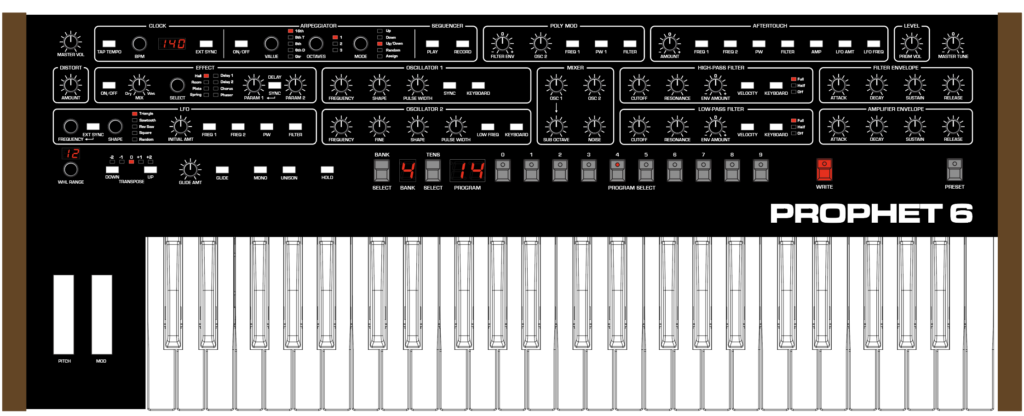
I showed the drawing in the staff meeting and voiced my concern about single versus dual effects. I think there was almost universal agreement among the employees that two effects were necessary. (There were one or two holdouts who were not convinced that the Prophet-6 should have digital effects at all.) I’m not sure Dave even expressed an opinion, so I don’t recall whether he was for or against. In general, if there was near unanimous agreement about something, Dave would go along, even if he was not a fan of the idea. Don’t get me wrong. One of Dave’s superpowers was his ability to say no, even when it was unpopular. It was part of what enabled him to get things done quickly. In this case, there was little or no debate.
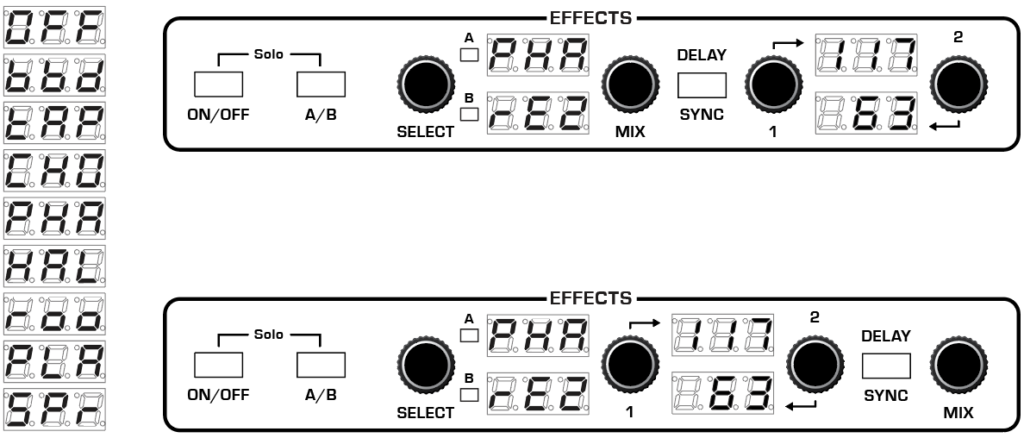
In situations like this, I would typically have an alternative solution available to show how it could be done. I made a drawing of just the Effects section with dual effects that was substantially the same as what ended up in production, but don’t remember if I did it before or after the meeting. A bit of trivia: The Effects section breaks the rule we had established regarding the user interface being knob- and switch-per-function. The single effect version had a Mix knob that was a potentiometer or “pot.” In manual (Preset off) mode, the knob would have accurately reflected the current value of the effect mix. In the dual effects layout, Mix is a rotary encoder and you don’t know what the level of the active effect is until you turn the knob, displaying it temporarily in place of the effect type. I could not come up with a better solution given the limited amount of space available. I think it was worth compromising to get that second effect.
The only other issue I recall was that there was some discussion about the utility of the step sequencer, and I was/am in total agreement that it is limited. There wasn’t space available to add more functionality and nobody could come up with a better use for the space that was there, so it stayed. That said, I can watch Jason Lindner do one of his improvised sequencer meltdowns over and over and not tire of it, and I was very pleased to see Gil Assayas (AKA Glasys) using the step sequencer to replicate the sound of early Utopia when he toured with them.
Looking at that initial drawing 10 years later, there are a few things that changed in later revisions of the drawing. Wheel Range was moved to a new “catch-all module” for miscellaneous parameters. Master Tune was moved to Globals. The Bank and Program displays were combined into a single 3-digit display.
There are two items that made it all the way to alpha hardware, the Off LEDs for filter keyboard tracking and half the final number of options for clock divide values. Once we had alpha hardware, it was obvious the Off LEDs were unnecessary. If neither Half nor Full are lit, keyboard tracking is off. The “missing” clock divide values are a bit of a mystery to me. I have no recollection of it being this way and looking at it now, it just seems, to use a Dave word, dumb. And it didn’t get changed until beta hardware. Maybe it was so dumb I purged it from my memory.
One important UI element that was not yet present in the initial design is a method for configuring the global parameters. Without a graphic display, the three 7-segment displays were the only way to display those settings and values. Thankfully, most of those parameters are “set and forget,” so the UI would not get frequent use. The decision was made to add a Globals mode switch that would enable the program switches to have the alternate function of selecting the global parameters. I added light gray text to the panel artwork to differentiate the global parameters from the normal operating parameters and to make the globals not visually “pop” so much.